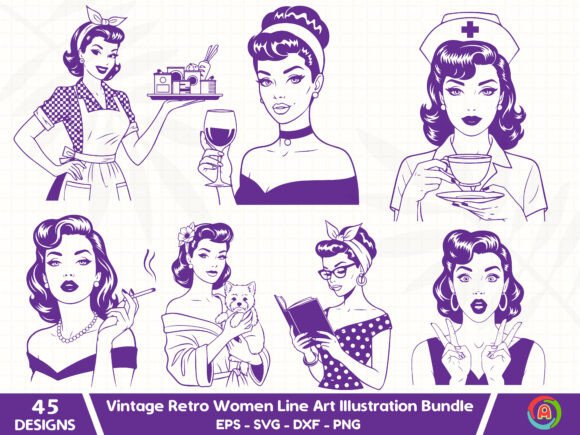
Vintage Retro Women Line Art Illustration Bundle: A Designer's Guide
That specific blend of nostalgia and elegance is hard to manufacture. It’s the feeling of a well-curated vintage shop or the cover of a classic novel. The Vintage Retro Women Line Art Illustration Bundle captures that essence perfectly, offering a collection of female character illustrations rooted in the aesthetics of 1950s pin-up culture and mid-century fashion. This isn't just a set of drawings; it's a toolkit for injecting personality and timeless style into modern projects.
Understanding the Visual Language: More Than Just Lines
At its core, this collection is defined by its clean, elegant line art. Each illustration prioritizes expression and form over excessive detail. You'll notice the confident strokes that define iconic hairstyles—victory rolls, soft waves, and elegant updos—and the subtle curves that suggest the drape of a classic A-line dress or a tailored blouse. The faces are expressive, often with a knowing glance or a gentle smile, conveying distinct moods: the focused reader, the nurturing nurse, the poised glamorous lady, or the cheerful housewife with her pet. This versatility is key. The style is bold enough to stand out on a t-shirt design yet minimal enough to function as a sophisticated logo design element.
The real power lies in its adaptability. The monoline aesthetic ensures these illustrations perform reliably across mediums. They scale beautifully for large posters and wall art without losing clarity, and they reproduce crisply on small stickers or social media graphics. The designs are optimized to work on both light and dark backgrounds, a practical consideration that saves designers time in production. This makes the bundle a robust piece of design assets for anyone working in print-on-demand or physical product creation.
Practical Applications: Where This Style Truly Shines
Think beyond a single use case. The strength of the Vintage Retro Women Line Art Illustration Bundle is its ability to unify a brand's visual story. For a brand identity project, these illustrations can establish a retro, approachable, and feminine tone. Imagine a boutique bakery using one of the "pet lover" or "housewife" characters as a mascot, or a literary blog featuring the "reader" illustration in its header and social media graphics. The style communicates warmth, reliability, and a touch of classic sophistication.
For editorial design and packaging design, the illustrations serve as engaging spot illustrations or central motifs. A cookbook could feature the housewife character throughout its pages. A skincare brand could use the glamorous lady on its product labels to evoke a sense of timeless beauty. In the realm of digital design, they make perfect assets for website hero images, blog post featured images, or animated elements that add personality without slowing down load times. The key is to use them consistently to reinforce the desired brand perception.
Making It Work: A Practical Framework for Designers and Creators
Adopting a new creative font or illustration style requires a strategic approach. First, evaluate the project fit. Does your client or project benefit from a nostalgic, feminine, and elegant aesthetic? If you're designing for a modern fintech app, this might not be the right fit. But for a local florist, a women's wellness coach, a vintage clothing store, or a romance novelist, it could be perfect.
Next, consider font pairing. These illustrations have a strong personality, so the typography you pair with them should complement, not compete. A clean sans serif font like Helvetica or Futura can provide a modern counterbalance. A elegant serif font like Garamond or Baskerville can lean into the classic, editorial feel. A simple script font could be used sparingly for a logo lockup, but be mindful of readability. Test pairings in context—place the illustration next to your headline and body copy to see how the visual hierarchy feels.
Always review the licensing. This bundle is designed for both personal and commercial use, which is essential for entrepreneurs and small business owners. Understand the terms for products you intend to sell, like on Etsy or through a print-on-demand platform. Finally, test for readability and impact. Use the illustrations to create a focal point. Let them guide the viewer's eye. Sometimes, a single, well-placed illustration is more powerful than scattering several throughout a design. By treating these assets as a cohesive system, you can build projects that are not only visually appealing but also strategically effective, leveraging a vintage aesthetic to connect with a modern audience.